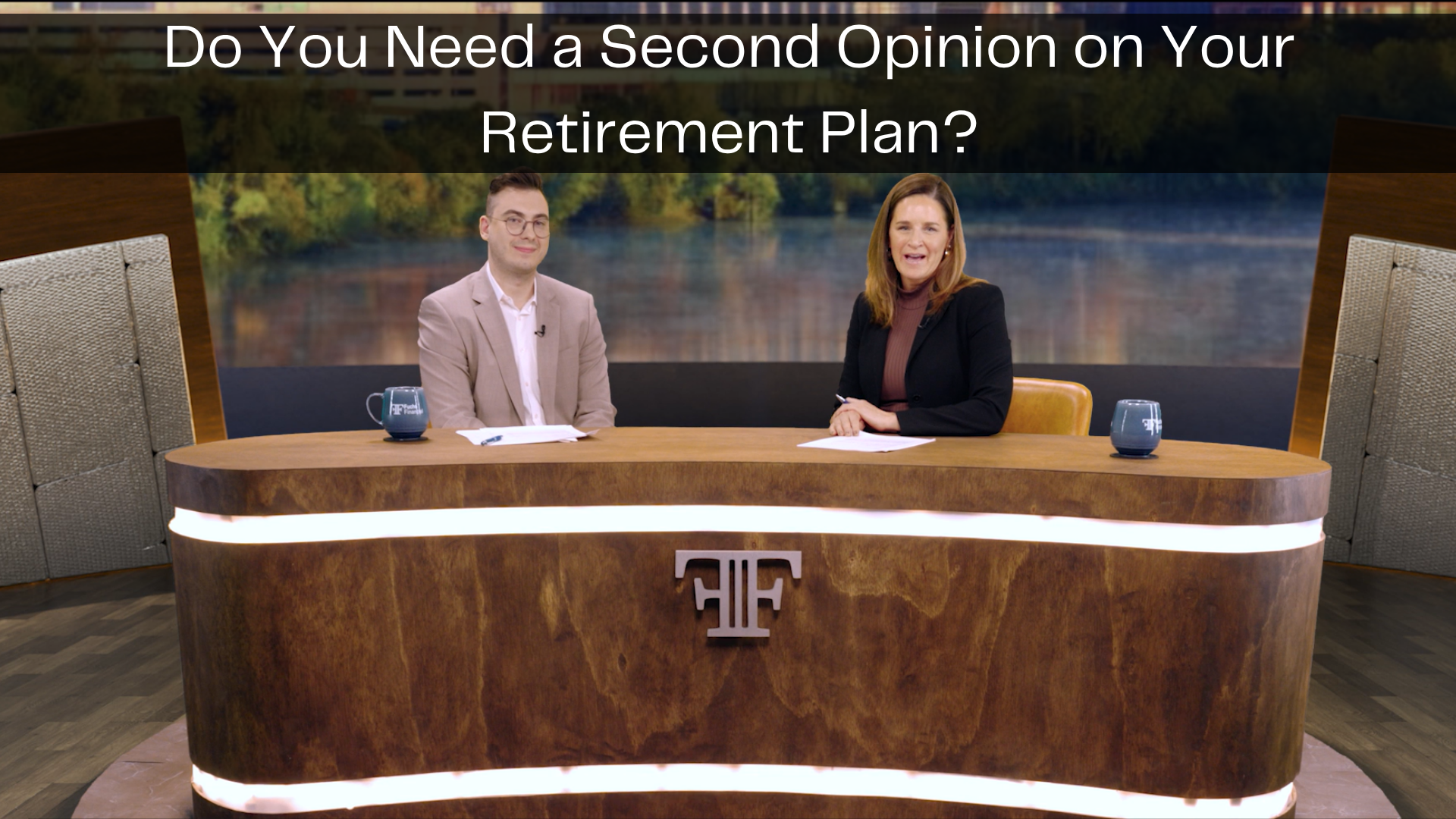
Hello and welcome to How to Retire. I’m Ben Fuchs, principal of Fuchs Financial, and today’s episode is about something we don’t cover enough, your neurological health and why it matters so much in retirement. My guest is Dr. Amanda Hernandez, a board-certified neurologist specializing in multiple sclerosis, neuromuscular diseases, and neuroimmunology. Dr. Hernandez, thank you for being here. What does all that mean? Thank you for having me. What does all of that mean? With respect to brain health and retirement and taking care of yourself in the context of neuroimmunological diseases, it means lots of things. I think overwhelmingly we’re existing in a world where people are living to be older and they’re living to be older and more able and they’re living to be older and more able with neurological disease. So brain health, I agree, is ever more important. I think that it stands to reason that the healthier that we are with respect to how we live our life and how we approach things, the better off it’ll be. with respect to our brain health. Now, I know we’re going to be diving into some specific neuroimmunological diseases and kind of those considerations for retirement. So we certainly can kind of do that. But basically speaking, autoimmune neurological disease is effectively something that causes damage to the muscle, the brain, or the nerves that is done by the immune system kind of getting hijacked and going haywire. Okay. Before we go further, how did you get it? Like, why did you get into this? Why was this your specialty? Like, what drove you here? No pressure. Great question. So I was always interested in the nervous system. I majored in neuroscience as an undergrad in college. And I decided… That was Columbia? Columbia, yep. And I decided… like a six-year-old that I wanted to be a doctor. Like I literally was that kid that had like the Fisher-Price stethoscope and the like plastic syringe and was like listening to all my cousins. And it was something that always inspired me. And it wasn’t until I got to college that I really fell in love with neuroscience. And so I took some time during my first year of medical school to kind of rotate. I rotated with a psychiatrist, with a neurologist, with a neurosurgeon. And I was like, what do I really enjoy doing? And it wasn’t until I found my Ph.D. advisor that I really fell in love with neurology and with autoimmune neurological diseases. So I didn’t just do medical school. I did medical school and did a Ph.D. and you identify. both from Yale. And you identify your PhD advisor during your first year or so of medical school. And so I met this wonderful person who was an expert in multiple sclerosis and a phenomenal neurologist. And I decided I was going to do my PhD and my dissertation with him. And that just kind of opened up the entire world for me. However much I loved neurosurgery and other neuro adjacent specialties, neurology just felt a little bit more like home to me. You got to build relationships with people over time. I got to sink my teeth in a little bit of the research that I had done during my PhD. And so it kind of just fell somehow, I kind of say serendipitously into place. And I’ve been able to build a career doing that. That’s awesome. Okay. So give me the basics. So how do these things happen? How do the autoimmune diseases happen? Are they genetic? Are there catalysts for them? Like what is the cause? Or is that like… the right question. I get the question a lot about genetic and genetic components and whether that has anything to do with autoimmune disease. And yes and no. We understand the distinction between nature and nurture. And I think, like I said, we’re all living to be older. We’re living in a world where things are kind of more in some respects processed, in other ways not processed. We’re existing in a world with a lot more technology. There’s all of these different things, global warming, the environment, that affect how we age and how our bodies respond to the environment around us. And so I do not necessarily think that there is like a firm genetic relationship between autoimmune disease, but I do think that you may be predisposed to having them. We know that they tend to cluster in families. So for example, I have patients that have multiple sclerosis, but they have a family member with rheumatoid arthritis or a family member with lupus. And the question is, well, is my child going to develop this? And the answer is, well, we don’t know, but like I said, we know they tend to kind of cluster. So it’s not necessarily, I would say, genetic, but I would be remiss not to say that there is some sort of relationship there. I mean, I think the big question for everybody is prevention, right? What can I do? Like, what can I do? Is it eating whole foods? Is it staying off titcock? Is it, you know, whatever thing that I see on my latest reel that is causing it that probably isn’t right? I mean, what can we do? So, I mean, staying off of TikTok, definitely. You’re not going to get the best medical knowledge on TikTok. Are you sure? Because I thought that’s where all of the experts… Not necessarily. And one may argue that they also don’t live on ChatGPT or Claude. Really? So I tell all my patients, please. Don’t get your medical information from places that are not reputable. I would rather them message me on my chart and ask me questions that I can answer than get their information from somewhere that may misinform them. Believe it or not, we feel the same way in financial planning. There are so many times where people will ask us a question and then just out of curiosity, I will ask ChatGPT or Claude the same thing. And I’m like, oh, that’s so wrong. Great. Anyway, please. Yes. So we understand this. Not TikTok, for sure. But I mean, exercising, taking care of yourself, going for walks. I think we often underestimate how important it is just to move. Take care of yourself, walking. I think people automatically assume exercise is like, you know, I’m going to go to the gym and I’m going to lift all these weights. And yes, resistance training is important, but also just getting up and moving. So you’re saying that’s not the answer to everything? Not the answer to everything. I think it’s a balance. It’s a balance of nutrition, wellness, good sleep, good habits. So nutrition is that funky subject, right? There are so many different takes on what good nutrition actually is. From your perspective, what is good nutrition? Not eating a lot of processed foods, I would say. Especially, we live in a world of GLPs, right? More and more people are going on these therapies and it’s harder to have a healthy appetite. Because… you are not as hungry or your food noise is quieter. And I have had to tell my patients, I’m like, I completely understand why you’re on this journey, especially certain women post-menopause, our bodies change. And if you have other predisposing health factors, it may be appropriate for you to be on a GLP. But then if you’re not eating as much, then you’re also eating less protein. And the protein really is what’s going to help keep muscles, keep things where they’re supposed to be. And so I tell my patients all the time, I’m like, Prioritize protein. If you’re worried about what you’re going to eat for breakfast, don’t run straight to the cereal. Maybe do a Greek yogurt and some oatmeal. I give them examples of how they can introduce more protein into their diet because as we age, our appetite changes. And then again, we’re in the era of GLPs. And so I do want to be sure that we’re tending to all of those other nutritional factors. So I am the youngest of three children. My sister, my little child, the middle child, is the one that tells my brother and I what to do all the time, which is great. And like two or three years ago, she had us read this like eight or nine hundred page book that talked about living as long as can, doing the decathlon at a hundred years old. And I’m like, Sarah, if you make me read this like thousand page book and all it tells me to do at the end is diet and exercise, we’re going to have a problem. And then lo and behold, the secret to aging and living longer was… literally just diet and exercise. And I’m like, why? Why do I have to read this whole thing for that? But is that really the answer? Well, it seems like the book thinks so, right? Well, you’re right. But I’m not asking to add TBT. I’m asking Dr. Amanda. I think that there’s something to be said for that. Okay. Overwhelmingly, looking across my patients and who I see, and I see 60-year-olds that look like they’re in their 40s. I see 60-year-olds that look like they’re in their 80s. And the one thing that I will say time and time again that resonates with me as a distinction between those two is how they not only approach their life, but how they take care of themselves, their mind and their body. Obviously, it goes without being said. don’t smoke, right? Especially as we get closer to retirement age, you know, you want to have that glass of wine with dinner because you don’t have to worry about waking up and going to work the next day. And I do see a lot of, you know, people that develop complications because they’re drinking more as they get older. So moderation, right? Eating in moderation, drinking in moderation, not smoking, avoiding any sort of toxic exposure that could be unhealthy for you. moving we talked about exercise and then having a good outlook right there’s something to be said for those patients that i have that may have you know pretty severe disease and even with that severe disease they’re like you know what but i’m positive i know that i’m on a good treatment i know that i have a good treatment team you know and i and i believe that i’ll be able to continue to do the best that i can do to be the healthiest that I can be. And those are patients that I definitely see overwhelmingly, not that they’re night and day doing better, right? But I think that positive outlook allows for their body to have a better kind of also, I would say emotional alignment, which has something to do with it too. That’s great. So all of the above. All right. Well, listen, we’ll be right back with more from Dr. Hernandez, including some specific conditions that tend to come up as we age. And a reminder, this is How to Retire, brought to you by Fuchs Financial in Middletown, Connecticut. If a health situation is changing your retirement picture, we should talk. We’ll be right back. Congratulations, Nancy and Mark. You’ve been chosen to play the retirement game. All right. First question, how long will you live? Too slow. Spin the longevity wheel. Nancy, will inflation eat your savings alive? I hope not. Let’s spin the slot machine and find out which strategy will you pick? At Fuchs Financial, we don’t spin wheels. We build real plans. Personalized, adaptable, and clear. Welcome back to How to Retire. I’m Ben Fuchs, and I’m here with Dr. Amanda Hernandez. Dr. Hernandez, I want to go through some specific… I don’t know, conditions, because I think people really don’t have a good understanding of what a lot of this looks like. So can you give me a little bit more detail? Can you give me a little bit more of like the day-to-day of what you’re seeing, what’s common out there for your neurological patients? Sure. So I am a sub-specialized neurologist, and I want to be very clear to educate the audience that there are many different types of neurologists. There are neurologists that take care of strokes. There’s neurologists that take care of seizures. There’s neurologists that take care of memory or cognitive issues. I am a neurologist that takes care of autoimmune conditions that affect the nervous system. I’m also a neurologist that takes care of any sort of problem between the nerve and the muscle. A lot of these conditions, I would say, if we’re talking about what’s common, right, what people would know, it would be like multiple sclerosis, myasthenia gravis, inflammatory neuropathies, things like that would kind of fall within my catchment area for patients. And in all of those, I see patients as they’re aging, especially, I would say actually across all three of them. through and through. And in the multiple sclerosis or MS community, we do really take care of a lot of women that are aging because MS tends to affect more women than men. So that’s a specific consideration there that the other two may not necessarily have. So, I mean, how do people start to distinguish between real neurological symptoms and just like normal aging? I would say a lot of… Careful and close observation. So in the scope of myasthenia gravis, for example, it’s an autoimmune disease that affects how the muscles and nerves connect. So the more that the nerve tries to connect, the harder it is to reach that kind of signal to the muscle. And so the muscle will become tired and more fatigued. And I’ve met patients who have said, you know, I noticed that I was a little bit more… you know tired later in the day like my eyes felt heavy but i didn’t think much of it or i had double vision sometimes while i was driving and i didn’t think much of it until it became more frequent and then i went to see my doctor and the first thing my doctor was concerned about was a stroke because as we age it becomes more likely to have that then they go through the whole evaluation and they didn’t end up having a stroke um and they end up meeting me several months later because someone was like okay well maybe you have this autoimmune disease that causes this problem And a lot of people that have. And that is the myasthenia gravis. Myasthenia gravis. So a lot of times with myasthenia gravis, people will have double vision, droopy eyelids, issues, swallowing, chewing. I’ll have people tell me, you know, when I have to chew a steak, it gets really hard for me to do that the more I do it. And then it’s like sometimes hard for me to swallow certain foods. And like those are things where I’m having someone tell me the more I try to do something, the harder it is for me to do it. talking, chewing, breathing, swallowing, double vision, I’m like, okay, we need to kind of dig into whether this may be possible. And it is something that is being diagnosed, I think, more commonly, not necessarily because it’s becoming more common, but I think it’s something that we know so much more about. So it’s kind of like, what’s the chicken or the egg? Are you able to diagnose something more because you know more about it so you can diagnose it? Or are you diagnosing it more because more people are having it? And it could potentially be a combination of both. But I do see that there are more people that are coming into my clinic with some of these different conditions, whereas maybe before we didn’t know what they were. And so they were just going on with life with these conditions as they were. So, I mean, so let’s say that happens, right? Somebody thought they had a stroke. It took a while. They found this disease that I don’t want to try to pronounce again. Sorry. That’s okay. So what is the sequence of treatment? Like, how do you go about diagnosing or finding out that they actually have it? Is it like, I don’t know what to do. So a lot of it is blood work, right? We can do blood tests to test for things like mycenae gravis. Sometimes we have to do testing and an electrodiagnostic. lab, which sounds a lot more fancy than I think in some respects what it actually is. It’s effectively a way that we can see how the nerves are functioning, how fast they’re receiving their signal and how fast they’re acting when they receive that signal. And we also can look at the muscles and see how well the muscles are connecting with the nerves and how the nerves, as they’re exiting the spinal cord, are able to kind of do what they’re supposed to do and get to that muscle. It’s called an EMG or electromyography nerve conduction testing. Some people may have had it. It’s not the most comfortable test in the world because your nerves have to get shocked. Does that sound fun? It kind of feels like, to me… You know when you take towels out the dryer and you didn’t have a dryer sheet and it’s kind of like static electricity? Got it. That’s what it feels like to me. My son is nine years old. He has one of those pens that’ll like shock you a little bit if you press down it. Is that the kind of thing? Okay. It’s not like a huge shock by any stretch of the imagination, but it’s enough to kind of startle you a little bit. Great. And then the second part. is a tiny little needle that we use to kind of listen to the connection between the muscle and the nerve. But not to go too far into that rabbit hole, that is one of the ways that we can diagnose something like myasthenia gravis. It’s also a way that we can potentially diagnose a problem like a neuropathy, for example. And sometimes patients do require that. But if they have the blood test that comes back as abnormal, usually they don’t have to do that. Oftentimes patients will have gotten, like I said, MRIs of their brain because they’ve been worried for stroke for some of those symptoms, right? So they may come to me with some of these things already done. And then it’s kind of on me to take a little bit of a step back and say, okay, well, no, I do think we need to send these tests and look for these things. Because you would think if the MRI doesn’t have it and we can’t figure out what’s wrong with you, then all of a sudden we have to have a whole different conversation. Right. Got it. Okay. I guess one of the questions that we had is, are autoimmune neurological diseases becoming more common? Or as you talked about earlier, are we just getting better at recognizing them? I think it’s that. And then I also think that we’re living to be older, right? And so I tell my patients all the time, I’m like, we age and our skin ages. Our skin gets wrinkly and sometimes gets saggy and no one wants to talk about it. It’s fine. It’s fine. My skin is fine. Go on. Right. And the same thing happens to our brain, right? Our brain doesn’t stay the same as we get older. Our nerves don’t stay the same as they get older. Our muscles don’t stay the same as they get older. And so those changes happen naturally as we age. And so I think it’s a combination of all of the above of potentially becoming more common. Again, nature, nurture, environment, what’s happening around us. I think it could be an instance of we’re so much more sophisticated in how we can diagnose neurological disease. Because of Chagibita? Because of… No. Not because of ChatGPT. I think because of a lot of research and meaningful work that’s happened in the neuroscience world and neurology world. And I think, like I said, we’re living to be older. And that can come with its own set of challenges. Like a natural byproduct of. Yeah. Got it. All right. So what should a family do if they… Feel like something is missed if they feel like you know, they’re They haven’t been able to diagnose like how do they? How do they get to you if somebody doesn’t draw the direct connection, right? Because they’re you’re obviously not the primary care doctor They don’t they don’t they don’t get to Amanda right away. How do they get there? I’ve had patients come to me on their own accord and say hi I looked you up and I think that this is something you might be able to help me with Sometimes it’s true and i’m able to help the patient and sometimes i’m like actually no i read what you’re saying and i think someone else might be better suited and so i do you know every every referral that comes to me comes to my clinic comes to my program is something that gets very carefully reviewed and if i feel like it’s something that i can help with then absolutely one of my teammates can help with certainly and then if not i do the due diligence to direct that person in the right space so i would say Some of it is advocating for yourself, right? Saying, I know that there’s something that’s still not right and I’m trying to figure out what it is. And sometimes it’s getting additional opinions. I tell my patients all the time, I completely support you getting a second opinion. The more people that you can have provide a certain background to you, the better it may be. Now, do you go out there and get 50,000 recommendations? No, because it also is a lot of information to have to kind of like collate and triage. But I think if you want a second or third opinion to just kind of add some additional kind of rhyme and reason to what’s going on, I think that’s certainly within your right to do. And those of us that are super sub-specialized like me, we all kind of know each other. So we can say, is it okay? talk to that doctor and we put our two brains together two brains are often better than one right so there is something to be said for that too the other thing that we didn’t even get a chance to discuss is like how do you jive with the person that’s caring for you how do you jive with the person that’s giving you financial advice like it has to be a symbiotic relationship I mean, you know, in our world, it’s the same way. People come to us because they want to retire in a certain way or because they have a certain idea of what their money can do for them. And for us, it’s kind of like, listen, we might not be the right fit. It might not be the thing that you want. Maybe the area that we want to go down isn’t the same, isn’t the right path for you. And that’s okay if you go talk to other people. I always, I mean, completely different feels. Completely different. conversation but i still think it’s good advice that you can always get a second opinion if you’re not comfortable and i feel like that’s incredible all right um we’ll be right back with dr hernandez advice on protecting your neurological health including the habits that may make the biggest difference this is how to retire brought to you by fuchs financial back in a moment we know the market is going to get worse from here this is the biggest monthly decline in 10 years people’s 401ks today my investments are tanking My retirement isn’t going as planned. I can’t believe I let my kid talk me into buying crypto. I mean, what is that anyway? This was the fourth worst contraction in history. So how are you two doing? Your financial future doesn’t have to be uncertain. Plan your retirement right. Call now for your own complimentary portfolio review and tax analysis. Welcome back. Final segment, Dr. Hernandez. Let’s shift to what people can actually do. What are the most important habits for people protecting the brain and nervous system as we age? Going back to, I think, a lot of what we’ve spoken about, it’s diet, exercise, and overall well -being. I fundamentally think that we should take care of our mind, our body, how we eat, sleep. All good habits. Naturally, as we age, I think sleep gets harder to come by because our sleep cycles shift. And so being a little bit more purposeful about that. In the world where everything is on a screen, right, trying to avoid screens an hour before you go to bed, that blue light or put the blue light filter on your phone to kind of at least allow yourself not to be that kind of overstimulated. Because I do hear. from patients that they have a hard time falling asleep because they’re like, well, I was scrolling through whatever you want to call it. I would have no idea. Yeah, right. Until like 10 p.m. and then I couldn’t fall asleep till after midnight. Got it. So what about meditation? I mean, you hear a lot about that. Is that something that you’re a proponent of or agnostic? Whatever someone needs to feel aligned. is right for them. For some people that’s going for a three mile walk for others, it’s going for a two mile run for some it’s hot yoga for others. It’s meditation, right? Um, you try to put me in a hot yoga class and I’m like no dice, but you asked me to go hang on in a Pilates performer for an hour. Absolutely. Like we all have the things that we align with. And so pick whatever that is and stay purposeful about it. I do maintain that I think that resistance training is as healthy as we age. If we don’t do some resistance training, it’s better for bone health, it’s better for muscle health, all of the above. But back to the question about meditation, I think whatever someone needs to feel good is what’s important. And for some people, I have patients that meditate and others that are like, I start my day and I journal. I talk about positive affirmations. And it can take a different meaning for just about anyone. But I think if you feel good going into your day-to-day and you’re having healthy habits, then you will probably be healthier. Awesome. So you were talking on break about a patient who knew that they were misdiagnosed. Can you tell me more about that? So this patient came to me with a diagnosis. The patient was older, while in her 80s. And she was like, I don’t feel like I’m being… And a lot of times when you have autoimmune neurological disease, you have to go on medications to tinker with your immune system to stop it from doing what it’s doing that’s causing it to go haywire. So we can’t just disavow medicine? No. Okay, got it. We can’t. Because the chat should be, never mind, go on? Not quite. Okay. And, you know, a lot of times as patients get older… rightfully so providers are like what do i want to tinker with that person’s immune system if they’re already in their 80s and there are they’re smart and logical ways to do it and they’re maybe not you know as straightforward ways to do it and so this patient came to me and was like you know i don’t really feel like i’m being treated for my autoimmune disease and i was like okay well let’s come up with a way to treat you and throughout this process together this patient had some complications and wound up hospitalized there was some confusion while this patient was hospitalized ultimately The family was under the impression that she… she may not be able to leave the hospital. And I was like, well, not quite. I think if we treat the problem at hand, we can get this patient out of the hospital. And we were able to get the patient out of the hospital. And this was someone that came to me and was like, I want to be a part of my family’s life. And I love to dance. And I love to be active. And I walk. And I play cornhole. And this is someone that’s in their 80s, but very much lively and vibrant and inspired to live life. And I’m looking at this person and saying, well, then let’s try what we can do to give you the best. quality of life. And that’s where I come from. You know, my overall thought when I’m with a patient is I want to meet you where you are. You’re coming to me. There’s a concern. Can I help you? And then if I can, what’s the best way for us to do that in a way that aligns with the life that you want to lead? And not everyone wants the same thing. Right. Well, which is my next question. How important is a chemistry match with your care provider, with your doctor, with the person that you’re going to be working with? I think to the best that you’re able, it’s great to have a relationship with someone that you feel gets you. I think that’s true across any relationship. with your financial advisor, with your accountant, with your doctor, with your primary care physician, whomever it is, you want to be in a space where you feel seen and heard, especially when you’re coming to that person when you’re at your most vulnerable. A lot of times when people meet me because I’m such a specialized neurologist, they are at their most vulnerable. And so they have to be in a position where they feel comfortable to share their concerns and also comfortable to engage in a trusting dynamic with me and with my care team. And that may not always be a perfect match, right? I mean, I can imagine some people being like, oh, you’re in your 80s. Let’s just try to take care of you. Let’s not worry about trying to fix. I mean, I can see that going a lot of different ways. I think we’re on to our last question. So to me, what is the most important thing that you want everyone to know? Like what is the one message that’s going to help them or resonate with them the most? Live your best life. Be healthy. Aim for as much positivity as you can. The healthier you are about your outlook, the healthier you are about your relationship with your body, the better I think everything is. And especially when it comes to, you know, managing long-term chronic disease, whether it’s neurological or other, that is something that certainly will bring true across the board. That’s awesome. Thank you so much. That is our episode of How to Require. If anything Dr. Hernandez described sounded familiar for yourself or someone you love, please don’t wait. Talk to your doctor. And if health situation is making you rethink your financial plan, Fuchs Financial is ready for that conversation too. I’m Ben Fuchs, plan smart, retire happy. We’ll see you next time. Every year, taxes are handled the same way. You earn income, the year ends, you file a return. That trains us to look at taxes through the rearview mirror. Retirement taxes should not work that way. Qualified retirement accounts are generally taxed based on future income decisions and future tax rates. Once those decisions are made, flexibility limited. That is why tax planning often works best when done proactively. Before decisions are locked in, visit HowYouRetire.com or scan the QR code to use our free tax calculator and see what the potential tax liability on your qualified retirement assets could look like based on current assumptions.