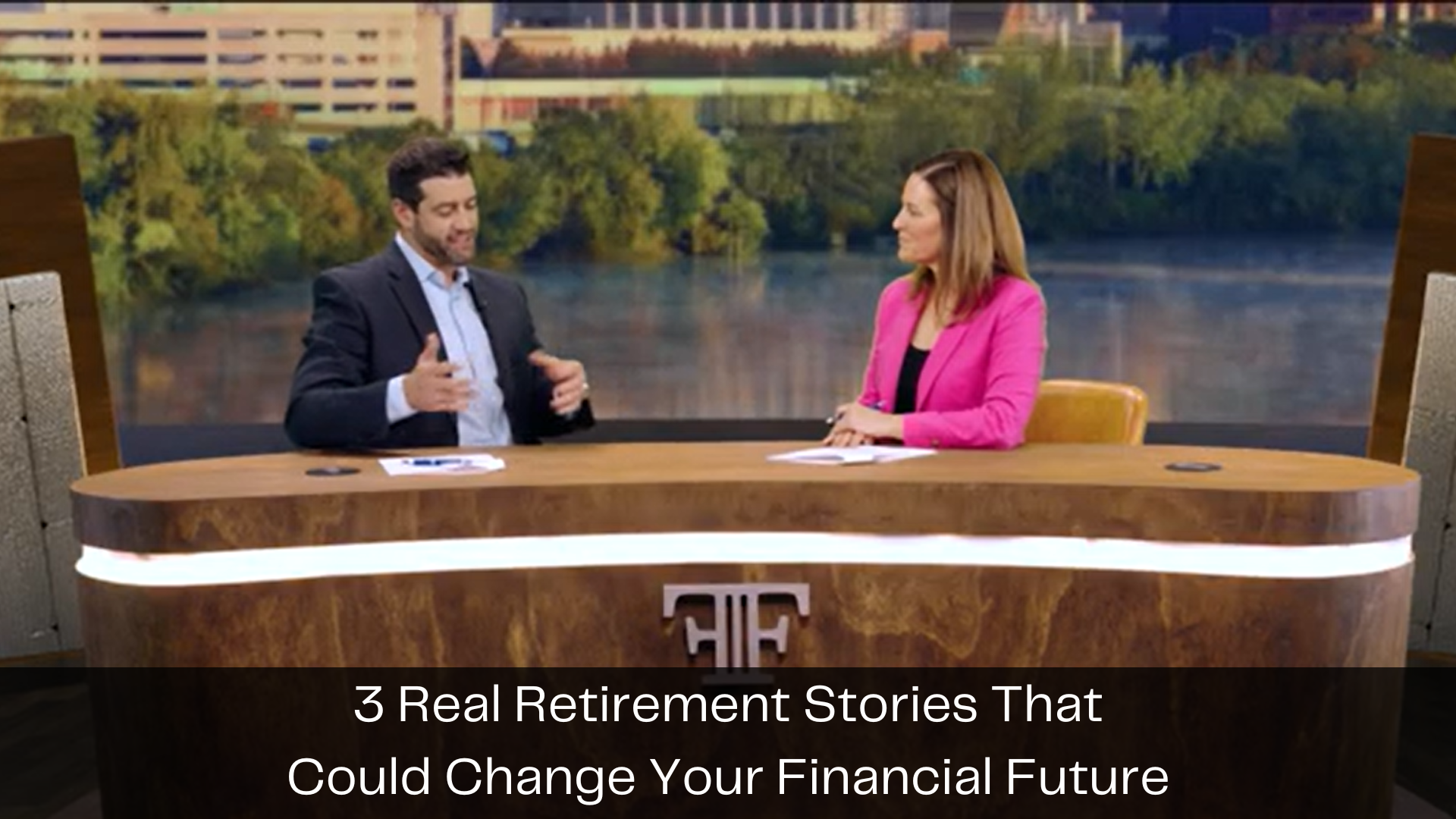
Hello, and welcome back to How to Retire. I’m Jackie Post, and today I’m joined with Gina Mazadra, who brings the best client stories of anyone at Fuchs Financial. Right, Gina? Yes. You’re supposed to just go with this. This is your big Emmys intro. I love it. Yeah. No, you really do have some great stories. We’re talking about real people here with real issues and real challenges. And so I think it relates to our audience. So tell us about your first client who’s going through something right now. Right. So my first client that I wanted to talk about, they are in their early 60s. They want to retire in the next few years. And when they first came in, they were really worried about running out of money. they had some big life changes that happened recently, and they’re going to have some bigger expenses come up that they’re going to have to cover. And I think what gave them some comfort is that we were able to talk through and figure out where the income is going to come from when they retire and being able to show them what their plan is going to look like. And so what was their exact problem in terms of running out of money? Can you talk a little bit about that? Honestly, they’re not going to run out of money because… They have enough saved. They have just over a million dollars saved. Their expenses are relatively low, besides maybe a few big purchases that they’re planning to do. They’re planning to buy a new car. So when that happens, they’ll draw down. They have cash on hand. But they’re not going to run out. They’re just. The type of people who have been so used to saving, saving, saving over their life that when it comes to spending anything, it’s really hard for them to get their mind around, you know, this is for me to use and I can spend some of it. So they’re overall in really good shape. How do their habits play into this? I mean, they save, I want to save 12% into their 401ks every year. So they’re constantly like paying themselves, paying their retirement before they’re taking that money out and for their everyday expenses. And, you know, they’ve just had really good habits over their lifetime. So, you know, they’re going to be in… It sounds like the ideal scenario for them, although they might not think it. And so talk about their behavior and how that’s worked for them over the years. It seems like that’s been their plan. They’ve really had their own plan. Yeah. I mean, they’re big talkers. So they like to come in and chat with me and tell me about their family, and I tell them about mine. But over the years, Just the fact that they’ve consistently been saving since early on, that’s put them in a good position. And it tends to be the people who are actually good savers, who are the ones who are worried about spending when it’s time to retire and actually taking some of that money and using it. Those tend to be the people who… the most worried but are actually in a good spot. But it does sound like maybe they just want to see you and catch up with you and know what’s going on in your life. Yeah, I love that too. They’re fun when they come in. I love that too. So what about Social Security for them and how does that play into their longer financial plan? So they’re going to take it when they retire. Hopefully they retire in about the same year so that they can go together. They’re planning on spending a lot of time with their grandkids and who happen to be the same age as like my kids and my nieces and nephews. So it’s fun comparing and seeing their pictures. But yeah, they’re going to take Social Security right around the same time that they retire. So that’s going to replace a portion of the income. The other portion is going to come from the income portfolio that we have set up. So that’ll be like the supplemental income. And then the backup plan is the fixed index annuity that we have, which if the market comes down, then they’re going to be able to draw on that during those periods of time. So the plan is pretty set up and ready to go for hopefully in the next year or so when they retire. It sounds ideal, but is there any scenario in which you can be too careful in retirement? Yeah, everyone has their everyone has their preferences on how much risk they’re comfortable taking and how much they’re not. Some people, you know, if you’re saving everything into cash, that can be, you know, maybe a little too conservative where it’s not actually earning anything and then you’re not even keeping pace with inflation. So then when you do go to start drawing down, inflation is just going to eat away what you’ve worked hard to save. So, you know, there are scenarios where we don’t really want to do that. Well, it sounds like they’re going to be just fine and go on to enjoy their retirement. They are. All right. Good news for them. Gina, we do have some more stories after the break. But first, this is How to Retire, brought to you by Fuchs Financial. If you’ve been saving carefully and still worried about whether it’s enough, that is exactly the conversation Fuchs Financial loves to have. Come in with your numbers and leave with a plan. We’ll be right back. Congratulations, Nancy and Mark. You’ve been chosen to play the retirement game. All right, first question. How long will you live? Too slow. Spin the longevity wheel. Nancy, will inflation eat your savings alive? I hope not. Let’s spin the slot machine and find out. Which strategy will you pick? At Fuchs Financial, we don’t spin wheels. We build real plans. Personalized, adaptable, and clear. Welcome back to How to Retire. I’m Jackie Post here with Gina Mazadra from Fuchs Financial. And today we’re telling stories, Gina. Yeah, we are. Which is my favorite. I love stories, life stories, financial stories, all of the above, right? Yeah, it’s perfect. Yeah, and it seems like you have a lot of really good ones. This next client, they’ve done a really great job saving, but they’ve done it in a lot of different places. So tell me a little bit about that and what that looks like. Well, so for this one, I actually have two different sets of clients who, have both done a great job saving, but we’re changing the way that we’re drawing down on their accounts. So the first client I have, pretty standard, they’ve done a great job saving mostly into their pre -tax accounts, all in IRAs. And when we’re drawing down, what they were previously doing was drawing on the non-qualified stuff, which they’re in their 70s. They’re going to have to start taking RMDs at some point anyway. So I said, well, let’s… stop drawing on the non-qualified and start drawing on the pre-tax. Yes, we’re going to pay taxes when we take it out, but we have to draw on it at some point anyways. And, you know, the non-qualified stuff, it’s a goal to leave money behind. The non-qualified and the Roth money is going to be a better account type to leave behind to their kids. So we changed up the strategy from what they were previously doing, drawing on like their brokerage type stuff and drawing on the pre-tax instead. The other… that I have that we’re comparing them to, we’re actually doing the opposite. We’re drawing on the non-qualified stuff first because they had some huge capital losses in their brokerage accounts. So for them, we’re actually going to draw on the non-qualified stuff first and then leave the pre-tax to continue growing and then leave the Roth that we’re going to continue contributing into. That way we can take advantage of the tax situation that they’re in and hopefully pay little tax when we do actually draw anything out. So now these are two different clients with the complete opposite scenario, which is so interesting to me. Were both of them or one of them surprised by the fact that they were doing the opposite of what they should be doing? And tell me a little bit about that because I bet you encounter that a lot. Yeah. So the conversation I had with the client who is drawing down on the non-retirement assets first. When they first came into the office, they had the mindset that, you know, we’re going to start to draw on the pre-tax first when we retire because they know about RMDs and they’re very educated. They’ve done a great job saving. They’ve done a lot of their own research and managed the accounts on their own. But when we were looking through everything and looking at some of our tax software that we have in the office… We thought, you know, what if we throw out this idea at them and say, well, we’ll start to draw on the non-qualified stuff first. And they were kind of surprised by that. It’s something that they hadn’t thought of before. So it was nice to be able to give them a fresh set of eyes and say, you know, let’s change the way that we’re going to go about this. Now, they’re not drawing down on anything quite yet because they’re still only in their 50s. They’re really young. But, you know, it was interesting because… we were able to give them a different solution for something that they were already doing a really great job planning for. The other clients who are in their 70s, you know, they had been drawing on these accounts for probably about 10 years now. So it was interesting for them that we’re going to just completely change up the way that we’re using our funds. So for them, that is a real time change because they work. actively drawing on it already. How do you have that conversation with someone, and how do you convince them that that’s the right way to go? I mean, they must have thought that they were on the right path, but it clearly wasn’t, and you put them in the right direction. I mean, it’s not that they were on the right path. They had done like 99% of the hard work already. It’s just a matter of being able to show them, hey, if we do this instead of this, and we have software in the office that we can show people what our reasoning behind what we’re choosing to do is. So we’re able to pull up on a screen and say, hey, look, if we do this instead of this, this is your outcome. And when we can show people that, it makes it really easy for them to visualize and say, oh, yeah, that actually makes a lot of sense. Yeah. All right, so Gina, so what are some of the ways for people to take advantage of the tax scenario for if they’re experiencing a capital gains loss? Right, so my clients who have the capital gains loss, the other way that we’re able to take advantage of it is, you know, while they’re living on some of the capital gains in their account and able to pay little to no taxes on it, we’re also during that time able to look at doing some Roth conversions for them. We can look at the scenario each year and figure out how much income did you need to live on? If we have any wiggle room, let’s do a conversion into the Roth bucket and let that continue to grow tax-free. And tell me about the Roth conversion and the Roth itself. Why protect it so carefully? So the whole benefit of Roth is that it’s going to grow tax-free over your lifetime. If it gets inherited by your kids, you can allow it to grow tax-free for 10 years, and then they take it out and… basically pay no taxes on it at all. So there’s a huge benefit to you if you’re paying into it. You’re going to have tax-free income later on in life. And then even if it goes to your kids and they inherit it, they also have the tax-free income. So I have actually something that I’ve been curious about. It’s called the widow’s penalty. And obviously we’re switching gears a little bit, talking about people who may have lost their spouse. Tell me about that term and how does it relate to finances and what do people need to know about it? So, and I think I know where you’re going with this because we’re going to have some client stories about that too. But what happens is if you have one spouse that passes away, now you’re filing as a single filer instead of married filing jointly. So to show the same amount of income, you’re going to be bumped up potentially into a higher tax bracket. And if you’re both taking Social Security, now you’re left with just one. of the two Social Security benefits. The other problem can be, you know, if you have pensions that you signed up for that you didn’t add survivorship to, you could be losing that. So, you know, when it comes time to deciding what pension to take, you know, I had people come in today who I helped fill out their pension paperwork and we did the 100% survivorship because, you know, historically women live longer and she is younger. So it makes sense that they have the 100% survivorship for her. So that if something does happen to him, she continues to get that income. All right. Two very different stories. Some interesting outcomes as well. We have one more story. You ready for it when we come back? All right. We’ll be right back. Fuchs Financial is here to help you figure out not just what you have, but how to use it. Call them. We’ll be right back. The market is going to get worse from here. This is the biggest monthly decline in 10 years. People’s 401ks today. My investments are tanking. My retirement isn’t going as planned. I can’t believe I let my kid talk me into buying crypto. I mean, what is that anyway? This was the fourth worst contraction in history. So how are you two doing? Your financial future doesn’t have to be uncertain. Plan your retirement right. Call now for your own complimentary portfolio review and tax analysis. Welcome back to How to Retire. We have one last story of the day with Gina, and we may want to warn people it’ll spark some feisty dinner conversations maybe. It might, yeah. We’ll see. It’s about marriage. To marry or not to marry is the question, right? So you have kind of an interesting story. Tell us about it. So, you know, it’s always a tough conversation to have with my clients in the office, but somebody has to ask, so I’ll do it. But, you know, I have two different sets of clients. One who should have gotten married, another who should not get married. One set of clients who, you know, we had the conversation with them back last year about, you know, it would make sense for you to get married because… If one of you passes away, the other one is going to inherit the retirement money without causing any tax issues. So what we mentioned before is that there’s like a 10-year rule when you inherit retirement money where you have to draw down basically on the entire account balance by the end of year 10 after that person passes. So what can happen is it can cause a lot of taxes, right? Especially if you have your… your own RMDs that you’re taking, now you’re going to have to draw down, say, 10% to 12% per year on that other person’s IRA money that you now inherited. So it can cause a lot of tax issues. But on the other hand, I have clients who are on the opposite end of the spectrum where it doesn’t make sense for them to get married because they’re worried about going into nursing homes. And I have seen clients who… Had a spouse who needed to go into a nursing home and she was not quite retired yet Her husband fell got insured and is now in a nursing home And she’s gonna be drawing down on all of her assets to support him being in there. What scenario is this are these folks who’ve They’re in like their second marriage. Is this something that it’s an older marriage? Okay, second marriages. Yeah, okay a lot, you know, the the couple that I had who you know, they each had probably about 1.5 million saved most of the money was in pre-tax so they chose not to get married they had gone back and forth on it over the years and um you know eventually decided not to because they didn’t want that to be the reason like they didn’t want money to be the reason that they decided to which is fair you know but um but what happened is now she has inherited about a little over a million dollars that’s in pre -tax money that she has to draw down on on top of her rmds and it’s just causing a ton of taxes for her right um is there a way to skirt around that or no it’s just that’s that is what it is not really because she has rmds So she’s already over 73. She’s already taking her income. I mean, there’s ways that we can do like charitable donations for her. So that can help somewhat. And, you know, the other thing she’s looking to do is just a lot of gifting. She wants to gift to some of his family, some of her family. So, you know, she’s OK with paying the taxes. But yeah, the way around the tax would be like some of the charitable donations. All right, so that’s the case for not getting married, right? Not getting, yes. Or no, getting married. You should have gotten married. Okay, let’s do the opposite. Now, the people who are not married and should not get married, they are worried about needing a nursing home, right? So they’re worried that their health is going to decline. They’re eventually going to, you know, one of them, they’re worried that he is going to need a nursing home. And that if they do get married… They’re going to have to start drawing down on her assets to support him being in the nursing home. So, you know, in that scenario, it makes sense that they don’t. If that’s their biggest fear is to have to be forced to draw down on your assets and, yeah, keep things separate and make it simple on yourself. They’re not really trying to inherit anything from each other. So that’s not a concern for them. They’re saying, you know, it’s going to go mostly to the kids anyways. So in that case, it makes sense that they don’t. What about blended families? Let’s kind of switch gears a little bit and talk about that because I think that is a scenario for a lot of people out there. Yeah. Where I mentioned, you know, second marriages or, you know, older marriages. What about blending families and how does that come into play in scenarios like this? Yes, I mean, you know, whoever you name as your beneficiary, that’s who is going to receive the account. So if, you know, I’ve had people come in who say, you know, I want to have this one child as the beneficiary. And they’ll know what to do with it. They’ll know that they have to divvy it out between the others and it’s like an iron. Like, that’s not how that’s going to work. If it’s in their name, they’re going to inherit it. And if they want to divvy it out, it’s going to be taxable to them. So that can cause problems. So I’ve had plenty of people who come in from blended families who they were like, you know, I have this one child and they’re going to take care of it all. I’ll name them for everything. But not understanding that that’s. causing more problems for that child to do it that way right right um so yeah we have seen some issues coming and and you know when people have that We’ll just talk through it and explain, you know, why you would do something, why you wouldn’t do something, like what are the pros and cons, and then let people make the decision on what they feel is best for them while I just answer the questions on, you know, what are the benefits of doing it this way versus the other. Right, right. All right, so are you ready? We’re going to play a little game. Oh, okay. It’s called I do or I don’t, all right? Sure. So I’m going to give you the scenario and then you can respond. All right, here’s how it works. I’m going to give you a scenario. Uh -huh. couple considering marriage. You tell me from a purely financial standpoint. I do, meaning marriage helps them, or I don’t, meaning staying unmarried is the smarter financial move. Okay. You can’t say maybe. You have to commit. Oh. Got to put a ring on it. Okay. Or not put a ring on it. I’ll try. Okay. All right. Scenario one. A couple where one partner earned much more over their lifetime and has a significantly larger social security benefit. The lower earners own social security. It would be very small. Should they get married? Well, yeah. So if they’re married and one passes away, the surviving spouse is going to get the higher of the two benefits, Social Security benefits. So that’s the reason why you would be married. Okay. So I do? Yes. I do. I do. You have to say I do. I do. I love it. You sounded so authentic. Scenario two. Both partners are high-income professionals. Each earns over $200,000, but neither needs the other’s Social Security benefit. They have separate healthy retirement accounts. Financial case for marriage. I mean, that’s a tough. Is that a maybe? I mean, so, well, so. They’re both saving into their retirement plans. It depends on what their concerns are, right? So if their concern is to make sure that they’re leaving everything behind to the other spouse and that, you know, it doesn’t just all go to taxes, then yes, get married. Okay. Yeah. I mean, they’re a younger couple and they’re, I don’t know. You didn’t say how old they were. No. They didn’t say. We don’t have an age, but. It depends on what the goal is with the money. Are you worried about leaving the money behind to the spouse? or to the partner or whoever they are, then yes. Okay. So yes, I would say I do. I do. Okay, good. All right. Scenario three. I know that was a hard one. One partner is a veteran with a military pension that includes a survivor benefit annuity, but only for a legal spouse. The other partner would get nothing if they’re not married when the veteran dies. Well, yeah. I do. Yeah, because if your main concern is to make sure that your spouse is getting that… benefit, and if you’re not married, they’re not going to get it, then of course, yes. All right. Definitely, I do. OK. All right. It’s I do, Gina. Yeah. It’s I do. All right. Scenario four. A couple where one partner has significantly more assets, the other partner is in declining health and may need long-term care within the next few years. Should they get married? That would be a no-go. No-go. OK. Yeah. All right. I don’t. I don’t. I don’t accept. I don’t accept. All right. Well, that was fun. I hope you enjoyed that. I know it was a little rocky for a bit. All right. That is it for this episode of How to Retire. And thank you to Gina for joining us. As always, she brings the stories that make everything real. If any of today’s stories felt like yours, Fuchs Financial is ready to have that conversation. Remember, no pressure, no pitch, just a real plan built around your real life. I’m Jackie Post. We’ll see you next time. when was the last time you saw your financial professional are you getting the most out of the strategy that was created for you although you’ve done a great job finding someone to help plan for your future are you 100 sure that you were given the right strategy we can help answer these questions and more with a complimentary second opinion evaluation we will take a look at what you have in place and then help determine if you’re well positioned to get the most out of your future retirement income In the event that it is not, we can help by making suggestions and showing you how to get on the right path. You wouldn’t get just one opinion when it comes to a major health decision, so why would you treat your most important financial decision with such disregard? Call today for your no-cost, no-obligation, second opinion evaluation to see if you’re getting the most out of your retirement income plan. I left college early. I was selling shoes at Nordstrom. So my girlfriend’s mother, who was one of the top realtors in Arizona, said, you can sell shoes, you can sell real estate, come down and I’ll teach you. So I go to Arizona, I get my real estate license, and I start working at a new home company. and i made more money than i ever thought i would and i wanted to be smart with that money so i reinvested all of it back into real estate i had like one and a half million dollars in actual real estate but with that like around a million dollars in mortgages i thought i would never do anything else for the rest of my life never thought i’d go back to school i learned about flipping homes about rental real estate about how to invest in new construction and i thought this was great until it wasn’t in may of 2006 you still had bidding wars on homes and people buying homes sight unseen in arizona and then in june of 2006 everything stopped it was terrifying and oh by the way I still have my million dollars in mortgages. I spent another year trying to unload everything that I had but I go from living in my brand new custom house to living in my parents basement. Going back to school full-time and working full-time again at Nordstrom. So after I graduated from UConn with honors, thank you very much, I wanted to stay in investments but I was terrified of risk and so I work for an insurance company. basic concept of insurance is that you’re transferring risk from you to that insurance company that resonated with me i don’t want the risk but after working for that company for three years you can’t be a fiduciary and work for one insurance company they pay your bills you’ve got to sell their stuff for that you know what’s the point for them so i went to a different company and it was a retirement planning firm and after a while i just felt like this was something that i could do better on my own and so that’s when i started future financial when it comes to filing for social security timing matters filing early at full retirement age or later can lead to very different benefit outcomes over time there is no universally correct choice there is only the choice that aligns with your situation and overall retirement plan understanding how each option works can help support more informed decisions before benefits begin visit shouldifilenow.com or scan the qr code to use our free social security calculator and see how different filing strategies could influence your overall benefit. As a good saver, you’ve been putting away money during your working years. Studies find that the biggest fear of retirees is running out of money. Market volatility isn’t just the downward movement of stock prices, it’s the size and frequency of change. The more dramatic the ups and downs, the higher the volatility. This can put savers who are newly retired or a few years away from being retired at greater risk. Today’s generation of retirees is not receiving traditional pensions as our parents or grandparents did. Instead, we have retirement accounts such as 401Ks or 403Bs. These accounts typically expose your money to market risk. The last thing you want right before retirement is to lose a portion of the money you need for income. But how do you turn these accounts into a retirement income? Is it safe to keep all your retirement money sitting in the stock market? The last thing you want is to lose a portion of the money you need for income due to market loss. By working with a financial professional, you can learn how to turn a portion of your savings into an income stream for life and income for the life of your spouse if you’re married. We all have moments in our lives when we wish we had taken action sooner. Don’t let procrastination rain on your retirement parade. Act now before it’s too late. Please call our office to set up your no-cost, no-obligation retirement income review today. So I got started in the financial industry right out of college. I started working for a retirement company out in Connecticut. I started there as a temp and eventually they found a full-time position for me there. So when I went there, I got my series six and my accredited retirement plan specialist designation, which is basically just working on like the 401k side. So I worked on like corporate 401k accounts. From there, I went on to work at another financial firm where I got my Series 7. I finished up my MBA concentrating in finance. I got my Series 66. And I was there for about, I don’t know, three years or so. Then had joined Ben back in 2021. And from there, started as an advisor with him and got another designation. So my retirement income certified professional designation. I got that, I don’t know, about five days before my son was born. I was finishing up the exams for that and I was feeling a lot of kicking. I was nine months pregnant and the proctor told me if I kept looking down, I was gonna have to be kicked out of the test. So that’s my story. That’s my background. I just enjoy working with people and talking to people and who doesn’t like helping others?