











If you’re approaching retirement, you may have heard about the Rule of 75 and wondered whether it means you’re ready or eligible, to retire.
The Rule of 75 is generally an employer- or retirement-plan-specific guideline that combines your age and years of service. Under a common version of the rule, you may become eligible for certain retirement benefits when those two numbers equal at least 75.
For example:
Age 55 + 20 years of service = 75
However, there’s an important catch: there is no single Rule of 75 that applies to everyone. Your employer or retirement plan determines the actual eligibility requirements and the benefits you may receive.
How Does the Rule of 75 Work?
The basic Rule of 75 calculation is straightforward:
Your age + eligible years of service = 75 or more
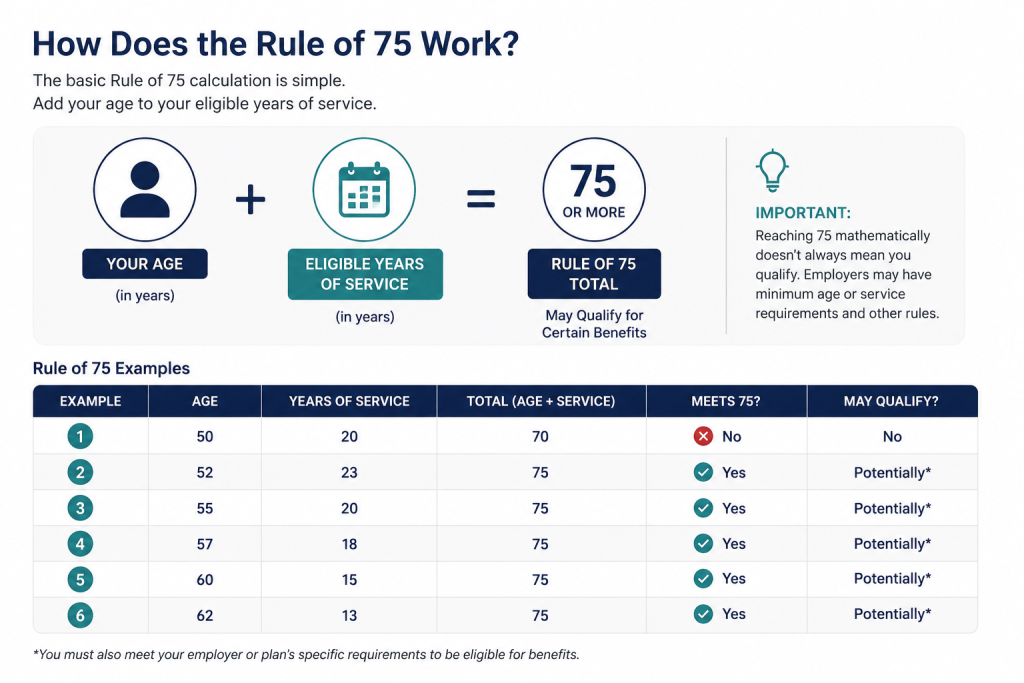
But reaching 75 mathematically doesn’t necessarily mean you qualify.
Some employers require a minimum age or a minimum number of years of service. Others may have rules based on your hire date, employee classification, or type of retirement plan.
For example, the University of Pennsylvania uses a Rule of 75 for certain retiree benefits but also has minimum age and service requirements.
That’s why it’s important to review your employer’s plan documents rather than relying on the calculation alone. The U.S. Department of Labor recommends reviewing your Summary Plan Description (SPD) to understand how your retirement plan works and when you may become eligible for benefits.
What Benefits Can the Rule of 75 Affect?
The answer depends on your employer and retirement plan.
Qualifying under a Rule of 75 could potentially affect benefits such as:
- Pension benefits
- Retiree health insurance
- Dental or vision coverage
- Life insurance
- Other employer-sponsored retirement benefits
The most important question isn’t simply, “Do my age and years of service equal 75?”
Instead, ask:
“What exactly does reaching the Rule of 75 qualify me for under my plan?”
Your HR department or plan administrator should be able to explain your eligibility and provide the appropriate plan documents.
Does the Rule of 75 Mean You’re Ready to Retire?
Not necessarily.
Meeting your employer’s Rule of 75 may make you eligible for certain benefits, but eligibility and financial readiness are two different things.
Before choosing your retirement date, consider where your income will come from and how your different financial decisions work together.
That may include:
- Pension income
- Social Security
- 401(k), 403(b), and IRA withdrawals
- Investment accounts
- Healthcare expenses
- Taxes
- Required Minimum Distributions (RMDs)
For example, you might qualify for retirement benefits at 58 but decide that delaying Social Security or continuing to work for a few more years makes more sense for your overall financial plan.
A retirement strategy should look beyond one eligibility date and consider how your income, investments, taxes, and healthcare needs work together.
Rule of 75 vs. Rule of 55
The Rule of 75 and Rule of 55 are not the same thing, even though both may come up when planning an earlier retirement.
The Rule of 75 is generally an employer-specific formula used to determine eligibility for certain retirement benefits.
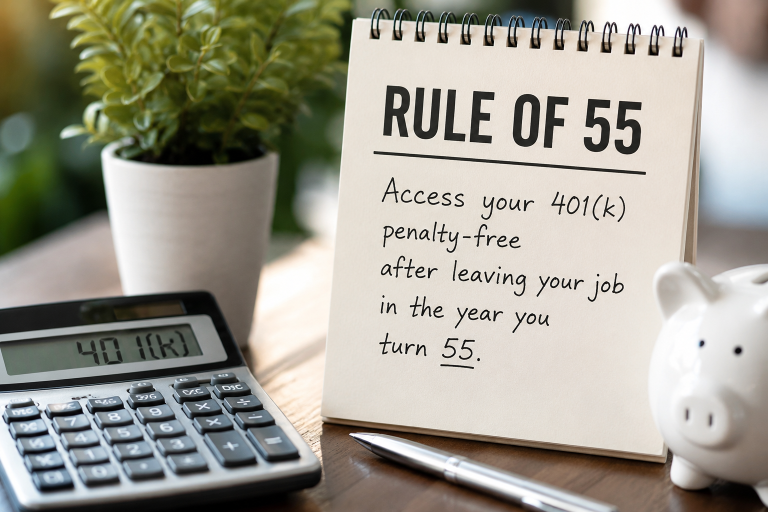
The Rule of 55, on the other hand, relates to federal tax rules.
Under certain circumstances, the IRS allows someone who leaves an employer during or after the calendar year they turn 55 to take distributions from that employer’s qualifying retirement plan without the additional 10% early-distribution tax that would normally apply before age 59½.
That distinction can be especially important if you are considering retirement in your 50s and expect to use your workplace retirement account for income.
Don’t Forget About Healthcare
Healthcare is another important consideration if the Rule of 75 allows you to retire before Medicare eligibility.
For most people, Medicare eligibility begins around age 65. If you retire several years earlier, you will need to determine how you’ll maintain health coverage until Medicare begins.
Your options could include employer-sponsored retiree coverage, a spouse’s employer plan, COBRA, or an Affordable Care Act Marketplace plan.
If your Rule of 75 provides retiree healthcare benefits, find out exactly what happens to that coverage once you become eligible for Medicare.
What Should You Check Before Retiring?
Before making a decision based on the Rule of 75, ask your employer or plan administrator for information about:
- Your credited years of service
- Minimum-age requirements
- Pension eligibility and payment options
- Retiree healthcare benefits
- Early-retirement reductions
- Survivor benefits
- Your Summary Plan Description
Then look beyond your employer benefits.
Consider whether your savings and income can support the retirement you want, when you should claim Social Security, how you’ll pay for healthcare, and how withdrawals from your retirement accounts could affect your taxes.
FAQs
No. There is no universal federal Rule of 75 that determines when Americans can retire. The term is generally associated with employer- or plan-specific retirement benefit requirements.
55 + 20 equals 75, so it satisfies the basic calculation. However, whether you actually qualify depends on your employer’s specific requirements.
No. Social Security has separate eligibility rules. Retirement benefits can generally begin as early as age 62, although claiming before your full retirement age reduces your monthly benefit.
Contact your HR department or retirement-plan administrator and review your Summary Plan Description. Don’t assume your employer uses the same Rule of 75 requirements as another company or retirement system.