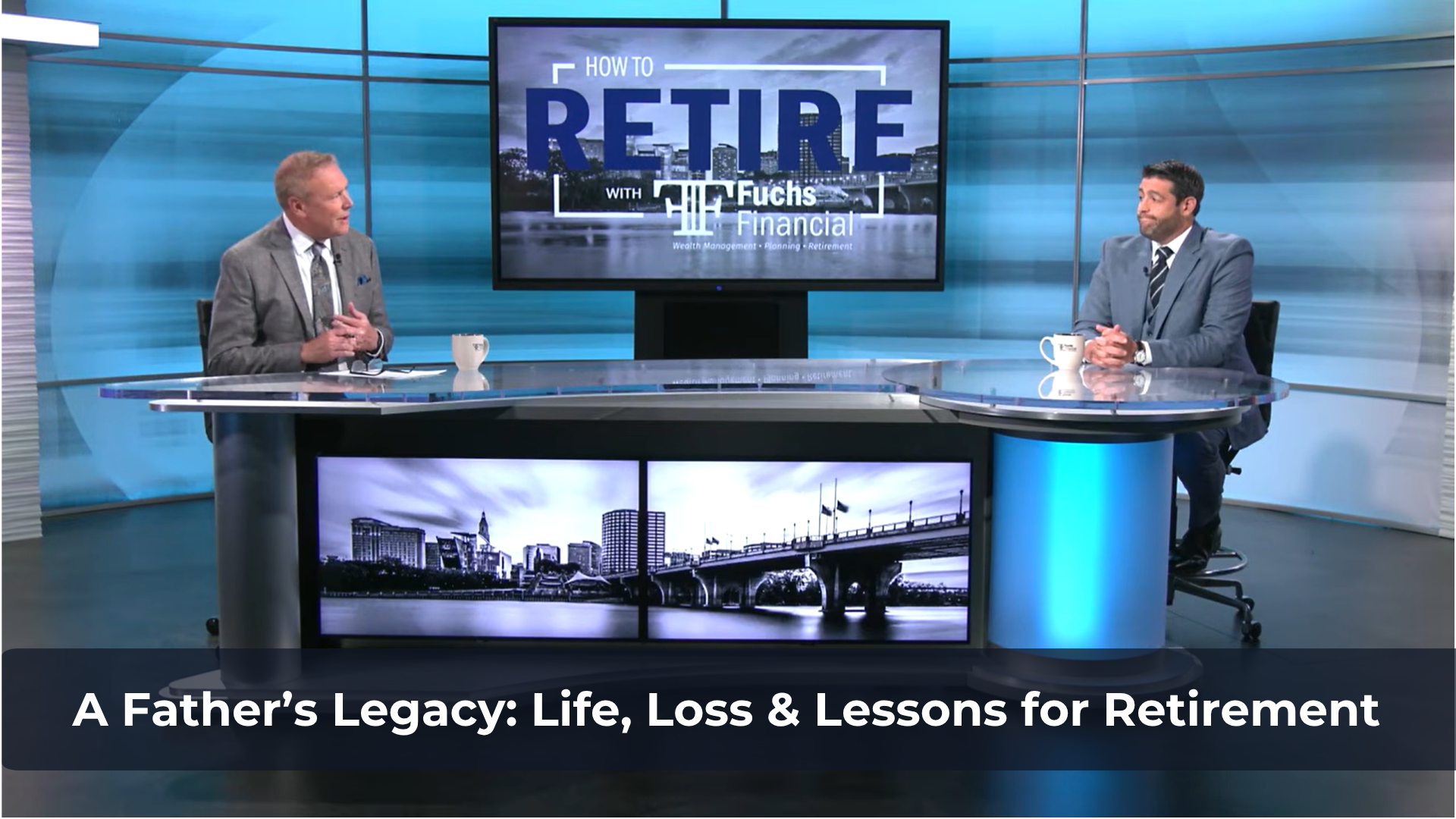
**BRAD JOHANSSON:** We’re so glad you’re back with us on *How to Retire*. I’m Brad Johansson, along with Ben Fuchs. Let’s get you the *How to Retire* blueprint. Your time is essential. It’s probably the greatest asset you have, which may be a good way for us to start today’s program. Ben and I have zero notes for this show, which is how we’re comfortable doing things because your financial plan should start with a conversation. The details come from that conversation. Ben says this often at retirement seminars: If you could just tell us when you’re going to die, we could come up with the perfect retirement plan. The problem is, none of us knows when that’s going to happen. And yet, that has affected you in a profound way recently. You lost your dad. **BEN FUCHS:** Yeah, at the end of July. **BRAD:** We’re going to spend some time talking about that. First, I want to know about your dad. For all of us, good or bad, our fathers can have a profound impact on who we become. Who was your dad? **BEN:** That’s one I actually wasn’t prepared for, Brad, but let me give it a go. Anybody who has watched me for a while knows that I’m rarely in a tie and never in a three-piece suit. My dad was a rabbi—literally until the day he died. Religion has a place for a lot of people. I’m somewhat religious, but who my dad was and what he believed shaped everything. Apparently, the name Fuchs Financial was second in his mind. He thought the company should have been named “Steven’s Son Financial.” But we settled on Fuchs Financial, and he was okay with that. I’m wearing the three-piece suit today because every time I got on an airplane, he would say, “Son, you’re wearing that? Back in my day, when I got on an airplane, I had a suit and tie on.” So, Dad, this is the whole outfit for you. My dad was an incredibly ethical human being. Every sermon he gave, from the time I can remember, he would say that our goal on this planet is to make the world a more just, caring, and compassionate society. Every week, my entire life, I heard that. My nephew’s birthday was July 19. I remember FaceTiming with my parents after they had talked to him. My youngest daughter’s birthday was the next day, July 20. We were expecting a call, but instead I got a text from my mom at 6:00 in the morning saying, “Call me immediately.” I called her, and she told me Dad had suffered a stroke. He was unresponsive, and they didn’t know what was going on. I said, “Okay, I’ll be down tomorrow,” and immediately booked a ticket. I wanted to spend that day with my daughter for her birthday. Later that day, my sister-in-law, who is a brilliant doctor, called me and said, “You need to go down today. Do not wait. Go now.” So I flew down. My brother and sister live in San Francisco, and they arrived around the same time. Around 2:00 in the morning, we got to the hospital. My dad was unresponsive. He was in a coma. The doctors told us he was stable and that they would call if anything changed, so we went back to my mom’s house to sleep. At 6:00 the next morning, we got a call saying we needed to come back. For the next several days, the five of us—my dad, my mom, my brother, my sister, and me—were together. We didn’t want to leave. We spent that time singing and saying goodbye to my father. When I came back to Connecticut after he passed, I was in the office for about three hours when I wrote what I call an “ethical will.” When my siblings and I were born, my father wrote songs for us that were essentially ethical wills. They told us who he wanted us to be. I’m incredibly grateful for that. So I decided I needed to do something similar for the company. What are we here for? What is our purpose? Part of what I wrote says: “Our job is to make this world a more just, caring, compassionate society. Our goal is to improve the lives of everyone who walks in our door. We understand that people are scared, and that’s why they come to us. We help people avoid mistakes in retirement. We will act as if everyone is standing before the person whose judgment they care about most when making decisions. We will treat appointments as if they just came from the hospital.” To me, that embodies who my father was, but it also embodies who we are and who we want to be. I realize this isn’t a normal show about Social Security and taxes, but I felt like it was more important to have this conversation. **BRAD:** What sticks out to me in that ethical will is, “Treat everybody as if they’ve just come from the hospital.” We know how our own day is going, but we rarely stop and think, “You have no idea what this person is carrying today.” Why was that so significant to you? **BEN:** About 10 years ago, in 2016, my father was in the hospital. He had been in the hospital many times before, but this particular time was pretty serious. I spent three days overnight in the hospital with him. When I came back to work, my first appointment was about 20 minutes late. I remember thinking, “I could be in the hospital with my dad right now, and this person couldn’t care less about my time.” I was fuming. Thankfully, I didn’t take it out on the person. People are late. It happens. But it made me realize that we need to treat people like they may have just gone through a terrible day. It’s our job to be there for them. If they make the effort to come in and see us, we need to have grace. We need to meet them where they are. We need to understand that not every day is perfect. Grief was also so much different for me than I expected it to be. I thought I would understand what happened, deal with it, and then be okay. I didn’t expect to drive home from work and start crying in my driveway. I didn’t expect to be angry. I didn’t expect to feel like things were unfair. For a while, I didn’t want to talk to anybody. I was lucky that I got hugs from my family, and that meant everything. It was just so different from what I expected grief to be. **BRAD:** That’s real life. Finances are everything you’ve saved while trying to figure out how to make it last—not just for you, but for the people you love. And that can be difficult when you haven’t been taught how you’re supposed to do it for the long haul. — ### LIFE, LEGACY & ESTATE PLANNING **BRAD:** We’re so glad you’re with us on *How to Retire*. Ben Fuchs is here with me. I’m Brad Johansson. Today is a different kind of show. We don’t have to say this show is only focused on grief. It’s focused on family and real life. We don’t like talking about death. We plan for retirement hoping to make it last as long as we have breath. Ben recently lost his father, so to honor him, we’re spending some time talking about his life and the legacy he left behind. That also brings us into estate and legacy planning. Ben, your dad wrote several books, right? **BEN:** Something like seven. **BRAD:** Really? **BEN:** I always told him they were just recycled sermons he consolidated and put into books. **BRAD:** Still a book! **BEN:** When you’ve been writing sermons for 50 years, you have plenty of material. One thing I will say about legacy and estate planning is that when we were in the hospital room holding my dad’s hand, I would not have let him go. I would have held on. We would have hoped for a miracle. We would have kept him on life support. But he had a living will. In that living will, he had a DNR—a do-not-resuscitate order. He was very clear: “If I can’t feed myself, do not keep me alive.” Even though that wasn’t what we wanted and wasn’t what we would have chosen, we had to follow his wishes. That was incredibly difficult. But we had several days together in that hospital. We sang every song we could think of because that’s what my father loved. My sister eventually opened one of his books to a random page. He was writing about Moses and the idea that we all have dreams that will remain unfulfilled. No matter who we are, there will always be something we wish we could have done but didn’t. The lesson was essentially: Go as hard as you can for as long as you can, because none of us knows when we’ll be taken out of the game. His message was that we should work to make the world better for as long as we can, while recognizing that none of us knows how much time we have. **BRAD:** That idea connects directly to this next chapter of life. We don’t know when our time is going to come. Your father seems to have lived his purpose until the very end. What lessons have you taken from him when it comes to helping people move into retirement and figure out their next chapter? **BEN:** For the vast majority of people, their job may be part of their identity, but it isn’t their entire identity. For my father, being a rabbi was who he was. He lived and breathed it. He loved it. That was how he went about making the world a better place. But for a lot of people, their job isn’t their entire identity, and that’s completely fine. When you enter retirement, I think it’s important to maintain a sense of purpose and meaning—to continue moving in a direction that brings purpose to your life. For us at Fuchs Financial, our job is to make sure money becomes something you don’t have to constantly worry about. Nothing brings me more joy than seeing someone who used to check their account every week, every day, or even several times a day eventually say, “I haven’t looked at my account since the last time we talked. Where am I at?” To me, that’s the point. You’re not supposed to spend all your time worrying about the things I’m supposed to be worrying about for you. I want clients to become comfortable enough to trust us so they can focus on the things that are more important to them. That trust doesn’t happen immediately. It might not happen in the first three months, six months, or even the first year. But over time, we’ve been able to build that trust with people so they can focus on what matters most to them. — ### WHAT DO YOU WANT YOUR LEGACY TO BE? **BRAD:** What is important to you? What do you want retirement to look like? What do you want your legacy to be? And how long do you want to make sure your money lasts? Those are the questions worth asking. **BEN:** I recently had a gentleman become a client who told me, “It feels like I’ve been taking a blind test my entire life, and I’m finally going to get graded on it.” I don’t want people to feel that kind of pressure. There’s no judgment here. Everybody has ups and downs. Everybody has situations where they did something they probably shouldn’t have or something they wish they could take back. That’s normal. It’s not important to dwell on what we did. The question is: Where do we go from here? I know what it’s like to deal with debt and slowly work your way out of it. I’m not that special. If I can do it, anybody can. It took focus and drive. Those experiences help me understand where people are coming from without judging them. You have one life. Enjoy it. The point isn’t to have a huge pile of money when you die. The point is to have a good, fulfilling life. So how do we make that happen with everything you’re doing? I don’t necessarily think of things as mistakes. They’re experiences. They’re part of our story. — ### LESSONS FROM OUR FATHERS **BRAD:** We’ve talked a lot about your father. Do you mind if I tell you about mine? **BEN:** Absolutely. **BRAD:** My father was a metal tubing salesman—and maybe one of the best to ever do it. But my dad struggled to show love. Money was how Dad showed love. His mentality was, “I want to make sure nobody in my family ever suffers.” He would put away 50 cents of every dollar. We didn’t know that until after he was gone. We only got 71 years with Dad. I lost him almost 30 years ago. My mom is now 98, and she never looked at another man after he passed. My dad grew up during the Depression, and he was terrified of his family not having enough. He raised six kids despite having difficult parents himself. The legacy he left was essentially: Do better than what you had. Take what you were given and create something better from it. My mom now has 16 grandchildren and 12 great-grandchildren. That legacy continues. **BEN:** How hard do you think it was for him to break that cycle and do something that was never modeled for him? **BRAD:** He was dedicated to making things better. One thing he always told me was, “My job is not to be your friend. My job is to make you a better father than I was.” Before we run out of time, I want you to leave us with your message about your father and what you do now because of what he taught you. **BEN:** I know I’m not perfect. I can write an ethical will and also understand that I’m not going to live up to every single bullet point all the time. One of my dad’s favorite ideas was this concept of “acting as if.” When he performed wedding ceremonies, he would essentially say, “Whether you believe in God or you don’t believe in God, act as if God brought you together. Act as if this was God’s will.” That’s my relationship with this now. I don’t know exactly what I believe about God, but I do know that I’m going to act as if my dad is watching every decision I make. And I’m going to do my best to put everybody in the right position every single time. **BRAD:** Hopefully, this conversation touched some of you and encouraged you to think about the road ahead, the help you may need, and the legacy you want to create. We probably won’t have many shows quite like this one. One may be enough. Maybe it inspires you to create the legacy you’ve always wanted. We’ll see you right back here next time on *How to Retire*.