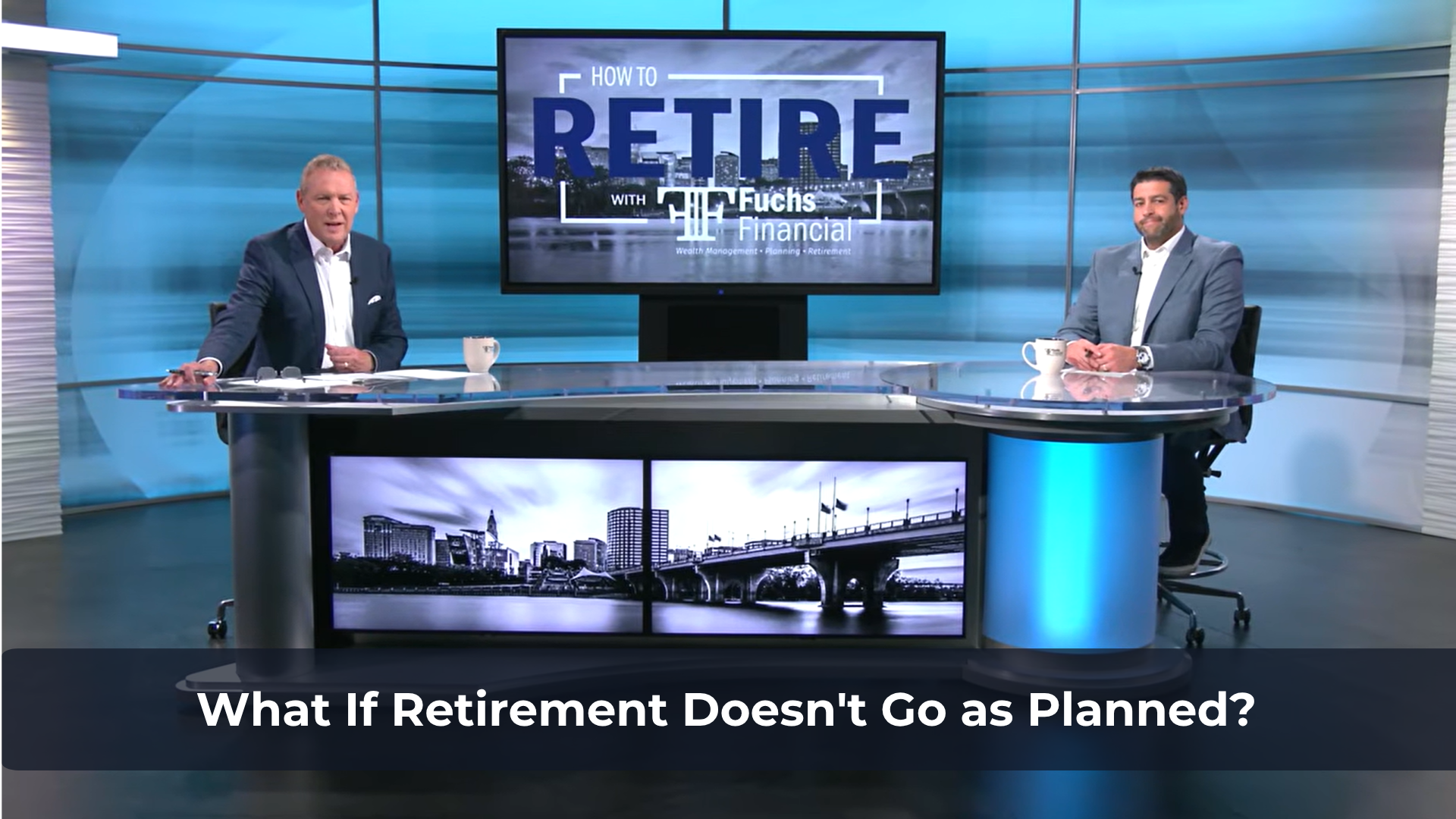
Introduction Brad Johansson: So glad you’re with us on How to Retire. I’m Brad Johansson, joined by Ben Fuchs of Fuchs Financial, and we’re getting ready to put your retirement blueprint together. It’s always a blessing to be back with you. How are you, my friend? Ben Fuchs: I’m doing okay. How are you? Brad: Let’s talk about the next 30 years, shall we? How to Make Your Retirement Savings Last 30 Years Ben: That might be the best segue you’ve ever had. Or maybe the worst! The idea is, how are you going to make your money last? Longevity is a big thing right now. If you want to retire, how do you make your money last for the rest of your life? I can’t tell you when you’re going to die, but the way things are going, you may have a long time to figure out how your money is going to last. Can we help you with that? That’s what we plan to do today. Brad: Should I logically be planning for 30 years of retirement? Ben: Yes. I believe that no matter where we are when we’re approaching retirement, we need to have a plan. If we’re approaching retirement at 50, we want to plan further out. But even if we’re approaching retirement at 75, we still want that plan because we want to make sure there isn’t anxiety. One of the problems with retiring is that you’re giving up a certain amount of control. You’re no longer getting that steady paycheck or following the same routine. You need to have a plan that takes care of everything. I remember one of the first meetings I had when I got into the industry. I met with a gentleman who was 80 years old, and he had planned for his money to last until he was 85. He probably wasn’t going to run out of money, but his savings were significantly lower than when he started. Brad: The anxiety of worrying about running out of money isn’t worth it. You might think, “I don’t believe I’ll live that long,” but what if you do? Are you going to have to move in with your kids? Are you going to have to move into a home? What’s the backup plan? Ben: Let’s plan to live longer. And if you don’t, make sure you know where your money is going to go. That’s part of your plan, too. Why Retirement Rules of Thumb Don’t Always Work Brad: We’ve been told these general rules about retirement. Reach a certain savings number, withdraw a certain percentage, and everything is supposed to work out. Ben: When you’re trying to spread knowledge to the masses, you have to come up with rules of thumb and generalities. As you know, I hate them. We do individual financial planning because every person’s situation is different. The person down the road who doesn’t have children is going to be different from the person who wants to make sure their grandchildren can go to college using the money they’ve saved. They have different goals. Someone who’s been divorced twice has a different situation from someone who hasn’t. A widower has different needs from someone who’s still married. We understand that people’s situations are different. That’s why we have this show. We want people to get a plan and understand where they are and what makes sense for them. We’re not simply using the 4% rule or 100 minus your age. We’re looking at what’s going to help you and give you the peace of mind to enjoy your retirement. The Go-Go, Slow-Go, and No-Go Years Brad: When I retire, I want to do things. Let’s talk about the go-go years, slow-go years, and no-go years. Is retirement going to cost me more in the beginning? Should I plan on spending more early in retirement because I know I might spend less later? Ben: There are some interesting studies on this. From my personal experience working with people over the years, we want you to spend your money while you’re able to enjoy it. When you can go on trips and it’s easier to travel, we want you to have those experiences. As people get older, they may not enjoy traveling as much as they used to. They might be perfectly happy gardening or spending more time at home. But there’s also the concern that if you spend too much during those go-go years, you could hurt yourself financially later on. What we’ve seen is that while people may spend more earlier in retirement, those who have the money and are able to continue spending often do so even during their slow-go years. For us, we want to make sure you can continue that lifestyle. We can model those expenses so you can see what retirement may look like and feel comfortable spending your money. How Often Should You Update Your Retirement Plan? Brad: How often should I adjust my retirement plan? I might have an idea of what my spending will look like early in retirement, but I know that’s going to change. Ben: We set up appointments every six months with our clients because we expect things to change. We expect scenarios to change. We expect life events to happen. Especially when you’re first retiring, you have an idea of what you think you’re going to spend, but we know that can change. We schedule those meetings so the plan can be continuously monitored. Things are going to change, and we’re going to be right there with our clients. The Three-Bucket Retirement Strategy Brad: Let’s say I’ve had all my money in the stock market, and the market has been performing well. Does it really make sense to move money out of something that’s doing well? If I’m planning for 30 years, shouldn’t I stay invested? Ben: Absolutely. You should have money in the market over the long term, but not all of your money should be in the market. We use a bucket strategy. We have your safety bucket, your monthly income or paycheck bucket, and your long-term growth bucket. The way we design plans is straightforward. We want your day-to-day expenses and normal monthly income needs to come from the income bucket. When the market experiences a significant decline, potentially 30%, 35%, or 40%, that’s when we may need to rely on the safety bucket. We want to have enough money available between those two buckets to help cover income needs for the next three to five years. That allows us to keep money invested in the stock market for the long term. We know that if you’re spending $5,000 a month now, you may need $6,000 or $7,000 a month in the future because inflation is going to continue. We need the opportunity to increase income over time, and that’s why we have the long-term growth bucket. But not everything should be invested for growth because that can increase the risk of running out of money. Managing Market Risk and Emotions in Retirement Brad: We’ve all heard the phrase “buy low, sell high.” Does that strategy change in retirement? How do I manage my investments without letting emotions influence my decisions? Ben: I think once you understand your plan and know where your money is coming from at any given time, you can take some of the emotion out of investing. When we meet with someone for the first time, we go through their portfolio. We run stress tests on their retirement plan, look at how much risk they’re taking, and review the fees they’re paying. We want to understand how their portfolio has performed during previous market declines and what risks they may be exposed to. Then we look at whether there are other investment options that could provide similar opportunities for returns with less risk. Sometimes, we’re able to make relatively small adjustments to a portfolio that can create a much better outcome. How Much Cash Should You Keep in Retirement? Brad: How much cash should I have available in retirement? Is there a standard rule? Ben: One of the first things you learn in financial planning is the importance of budgeting and having cash available for emergencies. Unexpected expenses happen. You might need new tires, a roof repair, or something else you weren’t planning for. Having cash available means you don’t necessarily have to go into debt to cover those emergencies. It’s the same concept in retirement. Our goal at Fuchs Financial is to generate the income clients need for their monthly expenses through their retirement portfolios. But I also don’t think you should have to call your financial advisor every time you want to spend a little extra money. You should have your own cash reserves available. When clients use some of that money, we can have a conversation about replenishing those reserves. Can You Have Too Much Cash? Brad: Is there such a thing as having too much cash sitting around? Ben: Absolutely. I remember growing up and being taught about compound interest. The message was always to leave your money in the bank and let it grow. But I don’t necessarily believe that’s the best place for all your money. The problem is inflation. Think about what a million dollars could buy 10 years ago compared to today. If all that money had been sitting in the bank without growing enough to keep up with inflation, you’ve lost purchasing power. We don’t want that happening over the next 10, 20, or 30 years. Understanding Your Retirement Risk Tolerance Brad: We’re often told that when we retire, we need to become more conservative with our investments. How important is it to assess someone’s risk tolerance when they first come into your office? Ben: Everybody has a completely different relationship with risk. I remember meeting with someone who had a significant amount of money in the bank. He was very conservative and had never wanted to take much investment risk. He had gone to a large brokerage firm, and they recommended a portfolio with 70% stocks and 30% bonds. That was much more risk than he was comfortable taking. He wanted someone who would meet him where he was. Over time, we worked toward finding ways to introduce certain investments while keeping him comfortable with the potential risks. Some people are extremely conservative, while others are extremely aggressive. Our job is to find the right balance for each individual. We want to make sure someone has enough invested for long-term growth to help address inflation, while also having enough in safer assets so they aren’t forced to sell stocks during a significant market decline. We’re working with individuals, not applying the same strategy to everyone. Building a Reliable Retirement Income Plan Brad: Let’s go back to the beginning. I need enough income to last throughout retirement. How do you determine how much income someone needs and build a plan around that? Ben: This is when I would usually get up from the table, go to the whiteboard, and draw three lines. We talk about growth, income, and safety. Let’s say you need $110,000 a year in retirement. You’re receiving $50,000 annually from Social Security and $20,000 from a pension. That means you need another $40,000 per year from your investments. Our focus becomes generating that additional $40,000. We look at what you need after taxes to live comfortably. In our income portfolios, we’re targeting an 8% annual return after our fees. If we’re charging 1.5%, that means we would need to generate 9.5% before fees. That’s a target, not a guarantee. There is risk involved. The goal is to generate approximately $3,333 per month from the investment portfolio, assuming market conditions allow the strategy to perform as intended. We also want to preserve the account’s value as much as possible so you can continue drawing income over time. Protecting Your Income During Market Crashes Ben: We’ve seen significant market crashes before, including the dot-com bubble, the Great Recession, and the COVID-19 market decline. That’s why we need a safety bucket. That bucket could include different options, such as an indexed annuity, certificates of deposit, or bonds, depending on the client’s situation. We look at the available options and determine what someone is comfortable with. The idea is to have another source of funds to draw from when the stock market experiences a significant decline. That way, you aren’t necessarily forced to sell your long-term investments at a loss to pay your bills. Once we’ve addressed income and safety, we can look at investing the remaining money for long-term growth. The market may be lower a year or two from now. We don’t know. But our long-term strategy is built around the expectation that markets can grow over extended periods. That’s how we approach creating a retirement plan. Why Your Retirement Plan Needs to Be Realistic Ben: This is everything people have worked their entire lives for. I don’t think anyone wants to go to an advisor who’s just going to tell them what they want to hear. Sometimes, you have to tell somebody, “Sure, you can retire, but you may have to spend half as much as you’re spending now.” If they’re not comfortable with that, then we need to figure out what has to change. At least we’re giving people numbers and explaining why their goals may or may not be achievable. You have to be honest with people. We need to understand how long their money could last, what rate of return they might need, and what adjustments may be necessary. Sometimes, that means addressing one issue at a time. I’ve met people with $1.5 million in investments who still have $40,000 in credit card debt. That’s something we need to address. We focus on each part of the financial picture so people can prepare for retirement and live the life they want. You don’t want to work for 40 years, assume you can afford a certain retirement lifestyle, and then find out the hard way that you can’t. Our goal is to help prevent that. How Taxes Impact Your Retirement Savings Brad: Let’s talk about taxes because they’re a major part of retirement planning. People have spent years putting money into retirement accounts and delaying taxes until later. But what happens when it’s time to start taking that money out? What will Uncle Sam want when you begin taking required minimum distributions? What happens when you pass those accounts on to your beneficiaries? It’s not just about how much money you have. It’s about how much you get to keep. Why is understanding those future tax obligations so important when planning for a 30-year retirement? Ben: Without question, taxes can be a major obstacle to making your retirement savings last. We talk a lot about Roth conversions and the idea of paying taxes now. Nobody wants to pay taxes. Ideally, we’d rather not pay them at all. But the goal of our retirement tax planning tool is to help people understand what could happen if they don’t consider strategies such as Roth conversions. How much might they owe in taxes later? What happens when they’re required to begin taking distributions from their retirement accounts? And do we think tax rates will be higher or lower in the future? I don’t have a strong argument for why they’ll be lower. Maybe they’ll stay the same, but given the amount of government debt, I think higher rates are a possibility. We want to have those conversations now and help people understand whether a Roth conversion strategy makes sense for their situation. Roth Conversions and Required Minimum Distributions Brad: How important is it to have a long runway before retirement to implement tax strategies? If someone has another 10 or 12 years before retirement, how much of a difference could that make? Ben: I think it’s great when you get to the point where you’ve converted a significant amount of pretax retirement savings into Roth IRA money and can potentially generate tax-free income. One of the things that frustrates me is when I see people who have worked with other advisors and have been placed into products designed to generate as much income as possible without enough consideration of the tax consequences. Generating more income isn’t necessarily helpful if it creates a much larger tax bill. It’s not what you make. It’s what you keep. That’s a priority for us. When we’re talking about long-term growth, longevity, and making retirement savings last, we want to make sure people are keeping as much of their money as possible. Creating a Long-Term Retirement Tax Strategy Ben: When people say, “Don’t worry about taxes. Just talk to your accountant,” that drives me crazy. We have two full-time accountants on our staff for this reason. We want to make sure our clients’ portfolios are as tax-efficient as possible. And there’s never just one thing to look at. We have to consider dividends, capital gains, interest, income, business expenses, and how a business might be structured. There isn’t one magic solution. We have to do the investigative work, figure out where the taxes are coming from, and determine what strategies might help improve the situation. That takes work. But that’s why we offer our retirement blueprint. Final Thoughts: Building Your Retirement Blueprint Brad: That’s why we encourage people to take advantage of a complimentary retirement consultation. Whether your biggest concern is taxes, Social Security, healthcare expenses, or simply making sure your money lasts, the goal is to put all the pieces together. Ben: We want people to understand what retirement could look like for them. That means having a plan that addresses income, investments, market risk, taxes, and the changes that can happen throughout retirement. The goal isn’t simply to reach a certain savings number. It’s to create a strategy that helps you maintain your lifestyle and feel comfortable about your financial future. Brad: If you’ve been putting off retirement planning, now may be the time to act. Use the time you have before retirement to make informed decisions and build a plan that reflects what you want your future to look like. To learn more or request a complimentary retirement blueprint, contact Fuchs Financial at 844-680-1709 or visit taxesandincome.com. We’ll see you next time on How to Retire with Fuchs Financial.